
DPDP Consent Management Platform – LP
Certinal replaces paper consent, manual intake, and uncontrolled forms with one platform built for Indian hospitals. Every consent captured, signed, purpose-tagged, and audit-ready for the DPDP Act.

Consent & Compliance Platform built for DPDP
Certinal is the Consent Management platform that makes DPDP compliance an operating standard, not a project. Every consent captured, signed, purpose-tagged, and audit-ready for the Data Protection Board.
- DPDP Act 2023
- HIPAA
- IT Act 2000
- NABH
- ABDM
- ISO 27001
- SOC 2 Type II
Trusted by healthcare organizations
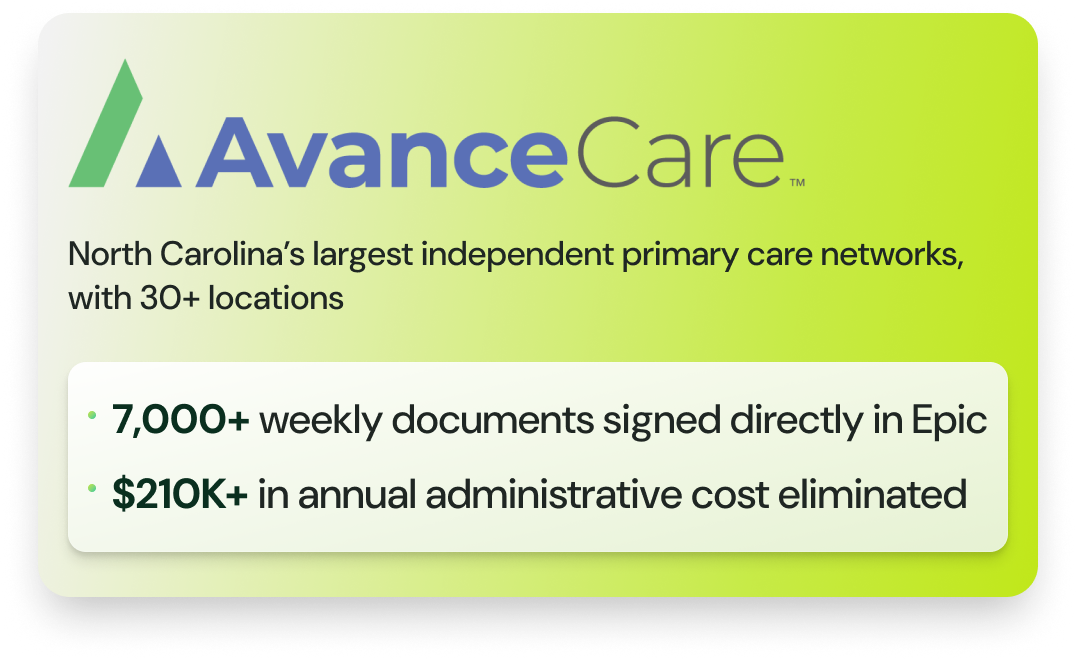
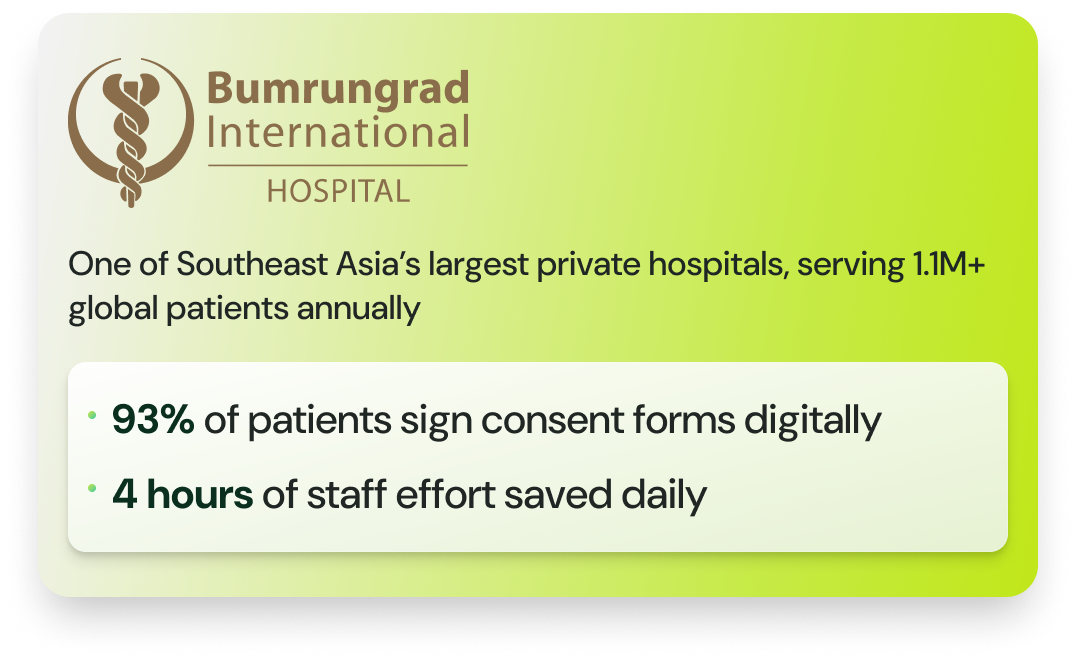
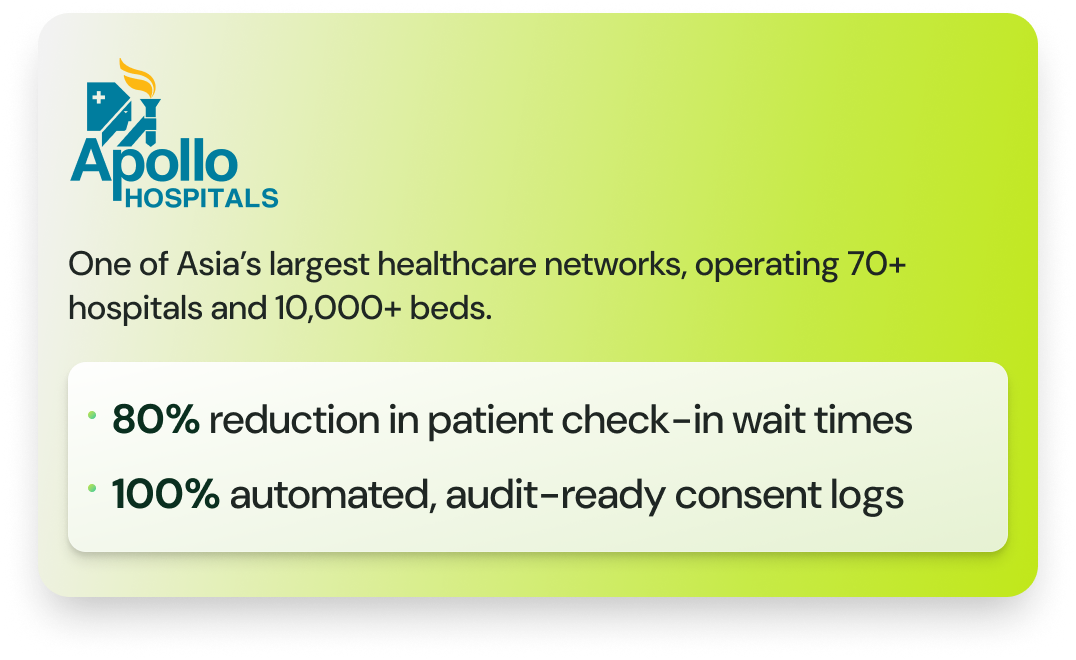













"Certinal's Healthcare Consent & Compliance Platform has transformed our digital consent workflows through seamless EMR integration. It’s a vital step in our commitment to delivering secure, innovative, and patient-centric care." Henrik Andersson CEO, Chief Innovation & Technology Officer of Bumrungrad International Hospital
Consent Management starts with compliance
01
DPDP Act 2023
Consent Management built for DPDP Section 6 and sensitive health data: purpose-based capture, granular notice, and Data Principal rights.
02
IT Act 2000
Section 5 compliant electronic signatures for medical records, prescriptions, and consent forms. Admissible in Indian courts.
03
NABH Standards
Consent documentation aligned with NABH patient-rights, AAC, and FMR standards. Audit-ready for accreditation surveys.
04
ABDM Framework
Patient consent for ABHA-linked records, Health Information Exchange, and ABDM-compliant data sharing.
05
ISO 27001
Certified information security controls for health data capture, storage, and exchange. Annual surveillance audits.
06
SOC 2 Type II
Independently audited controls over how Certinal stores, processes, and transmits patient personal data.
Consent Management under DPDP means three patient questions.
Every Indian patient is now a Data Principal under the DPDP Act. Three questions. Most hospitals can’t answer one.
Certinal answers all three from one record
Consent workflows, electronic signatures, Data Principal rights, notice management, evidence packs, DPDP reporting — one system of record for healthcare.
Show me what you've collected about me
A patient touches ten systems in one admission — registration, OPD, lab, surgical consent, discharge. Each captures data separately. No hospital can produce one unified record on demand.
- Patient data spans EHR, intake forms, lab, billing, and ABHA
- Manual reconciliation takes days; DPDP gives you a deadline
- No single record means no defensible disclosure
What purpose did I consent to?
DPDP requires every data point tied to a documented purpose at capture. Today, purpose lives on the form, not with the data. The link is inferred, not proven.
- Consent purpose lives on paper, not in the patient record
- Secondary use research and analytics has no documented basis
- DPDP needs proof of purpose, not assumption
Stop processing my data
DPDP gives every Data Principal the right to withdraw consent. Most hospitals can’t receive the request, halt processing, or prove they did. Continued processing by default is a DPDP violation.
- No self-service portal for Data Principal withdrawal requests
- Withdrawal must propagate to processors; today it doesn't
- Continued processing after withdrawal = Data Protection Board exposure
Consent Management — captured, signed, governed, proven
Surgical consent, treatment authorization, clinical trial, and telemedicine intake — captured, signed, and filed to the patient chart the moment the Data Principal acts. Every event audit-trailed. Every document admissible.
Consent Management workflows
Surgical, clinical trial, telemedicine, and treatment consent flows. Launches inside your EHR. Procedure-specific forms auto-matched to the encounter. Consent status visible to the care team in real time.
Digital Patient Intake
Pre-visit registration from any device. Demographics pre-populate from the EHR. Every data point tied to a DPDP consent purpose.
Digital forms library
Version-controlled repository for clinical, administrative, and consent forms. Outdated versions auto-retired. NABH-ready and DPDP-notice ready.
Electronic signatures
Legally binding under the IT Act 2000. Tamper-evident, time-stamped. Signer identity verified at capture. Full chain-of-custody. DPDP, NABH, and ABDM compliant.
Frequently Asked Questions
What is Consent Management under the DPDP Act?
Does Certinal integrate with our hospital systems?
How does Consent Management handle DPDP notice requirements?
Can patients withdraw consent under the DPDP Act?
Is the platform legally valid for Indian e-signatures?
What about NABH and ABDM alignment?
How long does implementation take?
DPDP Section 6 requires free, specific, informed consent — and treats health data as sensitive. Certinal captures consent against a documented purpose, with notice and a signed record linked to the patient.
Directly with Epic, Oracle Cerner, MEDITECH, and OpenEMR. Consent forms launch inside your EHR; signed documents write back to the patient chart. Other systems connect via HL7 and FHIR APIs.
Every consent request includes a DPDP-compliant notice in the patient’s preferred language. Purpose, data categories, retention, and grievance officer details are version-stamped with the consent.
Yes. Patients view, modify, or withdraw consent through a self-service portal. Withdrawal stops processing, notifies processors, and logs the request with a full audit chain.
Yes. Electronic signatures comply with the IT Act 2000 (Section 5), are evidentiary under the Indian Evidence Act, and Schedule II aligned for medical records. Admissible in Indian courts.
Consent documentation aligns with NABH patient-rights standards and the ABDM consent framework. ABHA-linked records, Health Information Exchange, and Data Principal portal — one audit chain.
7 business days for a single facility. Multi-facility rollouts within 30 to 60 days. A dedicated implementation manager on every deployment.
Consent Management for every patient interaction. DPDP-ready proof for every event.
Certinal gives you both. One platform. See it in 15 minutes.
© 2026 Certinal Inc. All rights reserved.
- Privacy Policy
- Terms & Conditions