
Healthcare Compliance Platform – LP
Book a Demo Healthcare Compliance Platform One platform for every healthcare compliance mandate Certinal replaces fragmented compliance tools, manual audit prep, and disconnected documentation with one system built for healthcare. Every regulation tracked, every interaction evidenced, every audit answered before it’s asked. HIPAA CMS-0053-F 21 CFR Part 11 DPDP SOC 2 Type II PDPA Schedule

One platform for every healthcare compliance mandate
Certinal replaces fragmented compliance tools, manual audit prep, and disconnected documentation with one system built for healthcare. Every regulation tracked, every interaction evidenced, every audit answered before it’s asked.
- HIPAA
- CMS-0053-F
- 21 CFR Part 11
- DPDP
- SOC 2 Type II
- PDPA
Trusted by healthcare organizations
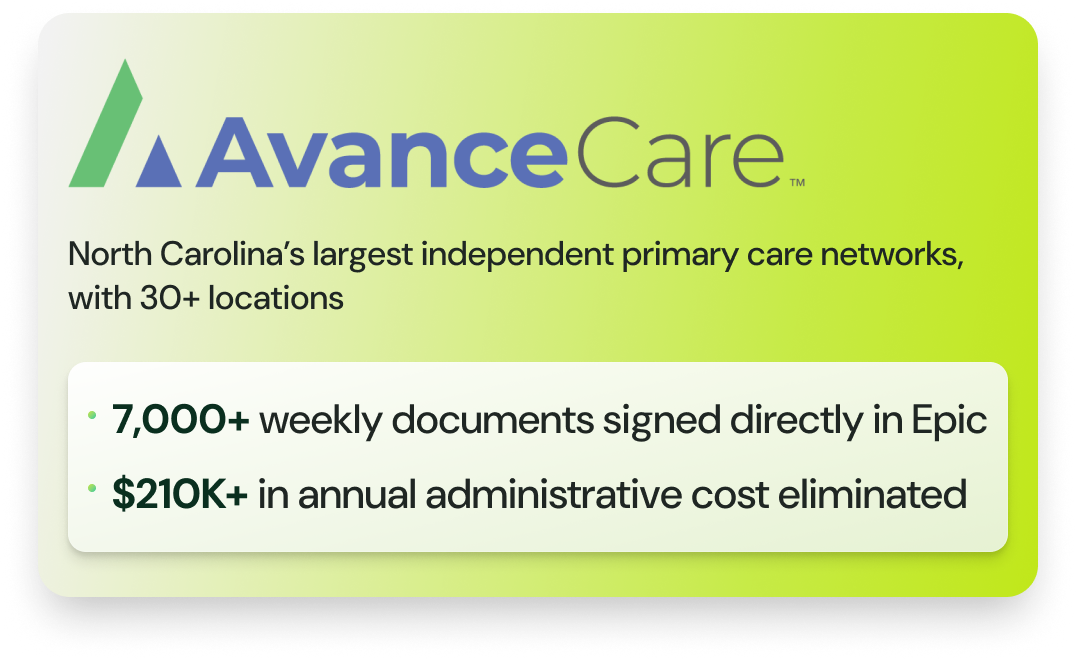
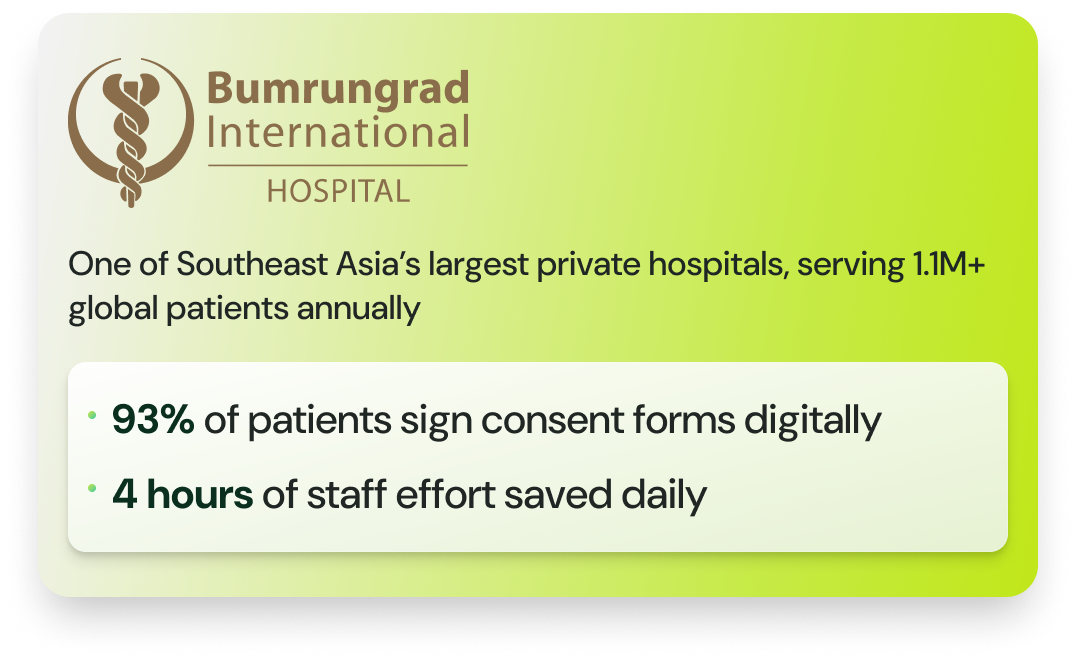
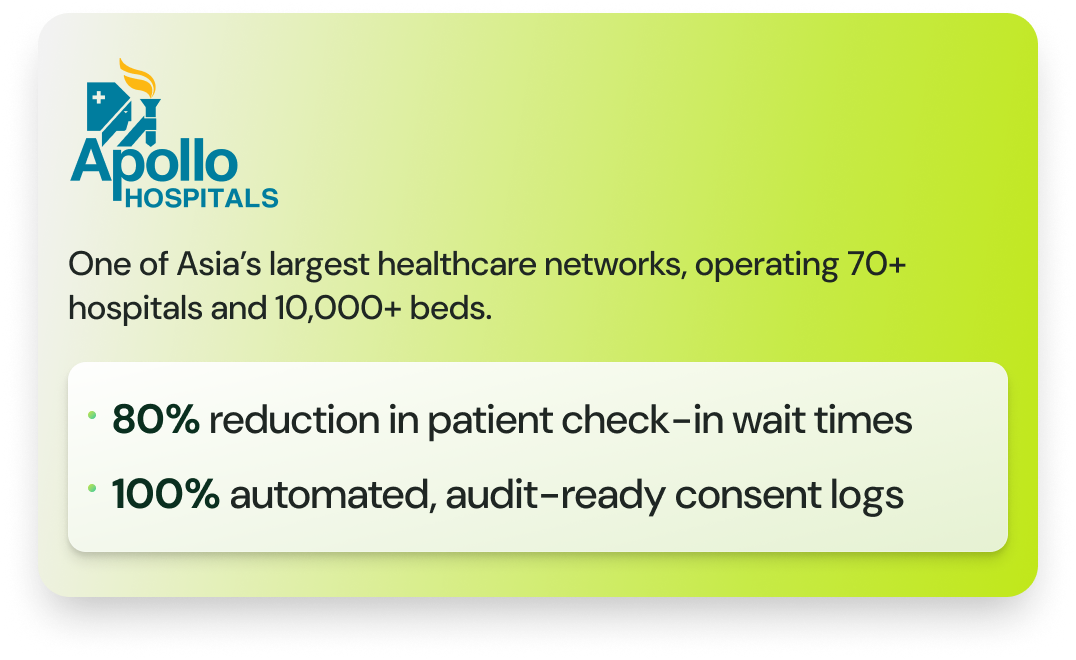













"Certinal's Healthcare Consent & Compliance Platform has transformed our digital consent workflows through seamless EMR integration. It’s a vital step in our commitment to delivering secure, innovative, and patient-centric care." Henrik Andersson CEO, Chief Innovation & Technology Officer of Bumrungrad International Hospital
Every mandate mapped. Every control enforced.
01
HIPAA
End-to-end encryption for patient data at rest and in transit. Immutable audit logs on every document event. Signed BAA with every healthcare customer.
02
42 CFR Part 2
Consent workflows built for substance use disorder records — stricter than HIPAA, with documented audit trails and granular disclosure controls.
03
21 CFR Part 11
FDA-grade electronic signatures with signer authentication, tamper-evident seals, and complete audit trails for clinical trial consent, IRB documentation, and medical device records.
04
CMS-0053-F
Secure, authenticated electronic signatures on claims attachments — meeting the first-ever HIPAA-adopted federal standard ahead of the May 2028 deadline.
05
ESIGN Act + UETA
Every consent document and electronic signature captured through Certinal is legally enforceable and court-admissible under U.S. federal and state statute.
06
CCPA / CPRA
Opt-out rights, deletion requests, and enhanced consent capture for health data classified as sensitive personal information under California law.
06
GDPR
Explicit consent collection, purpose-based processing, and data subject rights management for health data as a special category under EU law.
06
eIDAS 2.0
Electronic signatures validated across all three EU enforceability tiers — simple, advanced, and qualified — for healthcare consent documents across Europe.
06
DPDP Act 2023
Purpose-based consent collection, documented audit trails, and data subject rights management for Indian healthcare organizations.
06
PDPA
Compliant consent capture, preference management, and cross-border data handling for healthcare organizations operating across APAC jurisdictions.
06
SOC 2 Type II
Independently audited controls over how Certinal stores, processes, and transmits protected health information. Annual certification renewed.
06
ISO 27001
International standard for information security management. Certinal’s certified controls cover how patient and consent data is stored, accessed, and protected across its entire infrastructure.
Healthcare compliance isn't one gap. It's three running at once.
Hospitals juggle overlapping regulations across disconnected systems, unversioned documents, and undocumented data flows. Each gap is a finding waiting to happen — and they compound.
Certinal closes all three gaps from one platform
Consent evidence, document governance, signature compliance, data rights tracking, and audit reporting — one system of record for every regulatory mandate your organization faces.
Compliance evidence is scattered
Consent records live in one system. Signatures in another. Intake forms in a third. Credentialing in a fourth. When an auditor asks for proof, staff manually reconcile across all of them.
- No unified audit trail connecting consent, signature, and document version
- Claims documentation still moves by fax — CMS-0053-F changes that by May 2028
- Audit readiness depends on spreadsheets and manual cross-referencing
Regulations keep stacking
HIPAA has always been there. Now add DPDP for India, PDPA for APAC, 21 CFR Part 11 for clinical trials, and CMS-0053-F for claims. Each mandate has different evidence requirements — and no organization has one system to serve them all.
- Overlapping mandates with conflicting documentation standards
- No centralized view of which regulations apply to which workflows
- Compliance teams spend more time gathering evidence than analyzing risk
Documents are uncontrolled
Consent forms, intake packets, and authorization templates circulate without version control. Outdated forms get signed. Retired templates resurface. One wrong version triggers a finding.
- No visibility into which form version is active across departments
- Outdated consent forms circulate without anyone noticing
- Every uncontrolled document is a compliance exposure in the next audit
Compliance — evidenced, governed, enforced, and audit-ready
Every consent captured, every signature authenticated, every document version-controlled, every data flow documented. When the auditor arrives, the evidence is already assembled.
Compliance-ready consent workflows
Surgical, clinical trial, telehealth, and treatment consent — each tied to a documented compliance purpose. Launches inside your EHR. Consent status visible to the care team and compliance office in real time.
Governed document library
Version-controlled repo for all forms with auto-retirement, change history, and Joint Commission/DNV compliance.
Tamper-evident eSignatures
Legally binding, time-stamped signatures with full chain-of-custody. HIPAA, 21 CFR Part 11, and CMS-0053-F compliant.
Unified audit trail
Every consent event, every signature, every document access — logged, time-stamped, and exportable. One evidence pack answers HIPAA, DPDP, PDPA, and CMS audits without manual assembly.
Frequently Asked Questions
What compliance mandates does Certinal cover?
Does Certinal integrate with our EHR?
How does Certinal handle HIPAA compliance?
How does the platform prepare us for CMS-0053-F?
Does Certinal support DPDP Act compliance?
What does the audit trail capture?
How long does implementation take?
HIPAA, 42 CFR Part 2, 21 CFR Part 11, CMS-0053-F, ESIGN Act + UETA, CCPA/CPRA, GDPR, eIDAS 2.0, DPDP Act 2023, PDPA, SOC 2 Type II, and ISO 27001. Organizations operating across the U.S., EU, India, and APAC manage all overlapping mandates from one platform.
Directly with Epic, Oracle Cerner, MEDITECH, and OpenEMR. Compliance workflows launch inside your EHR and completed records write back to the patient chart. Other systems connect via HL7 and FHIR APIs.
Data encrypted at rest (AES-256) and in transit (TLS 1.2+). Signed BAA with every healthcare customer. Annual SOC 2 Type II audits. Full audit trail on every consent and signature event.
CMS-0053-F requires electronic standards for claims attachments and signatures by May 2028. Certinal’s electronic signature and document handling capabilities already meet these standards — no retrofit needed.
Yes. Purpose-based consent collection, documented consent trails, and patient preference management. Every data point tied to a processing purpose. Patients can view, modify, or withdraw consent. Full audit chain on every interaction.
Every consent event, signature action, document access, form version change, and data rights request. Logs are immutable, time-stamped, and exportable as evidence packs for any regulatory audit.
7 business days for a single facility. Multi-facility rollouts within 30–60 days. Dedicated implementation manager on every deployment.
Every audit starts with evidence. Every regulation demands proof.
Certinal gives you both. One platform. See it in 15 minutes.
© 2026 Certinal Inc. All rights reserved.
- Privacy Policy
- Terms & Conditions