
Healthcare eSignature Software – LP
Book a Demo eSignature for Healthcare eSignature That Works Inside Your EHR Most eSignature tools were built for sales contracts. Certinal was built for healthcare. Every document signed inside your EHR, identity-verified at capture, and filed to the patient chart automatically. HIPAA CMS-0053-F 21 CFR Part 11 ESIGN Act SOC 2 Type II GDPR ISO

eSignature That Works Inside Your EHR
Most eSignature tools were built for sales contracts. Certinal was built for healthcare. Every document signed inside your EHR, identity-verified at capture, and filed to the patient chart automatically.
- HIPAA
- CMS-0053-F
- 21 CFR Part 11
- ESIGN Act
- SOC 2 Type II
- GDPR
- ISO 27001
Trusted by healthcare organizations
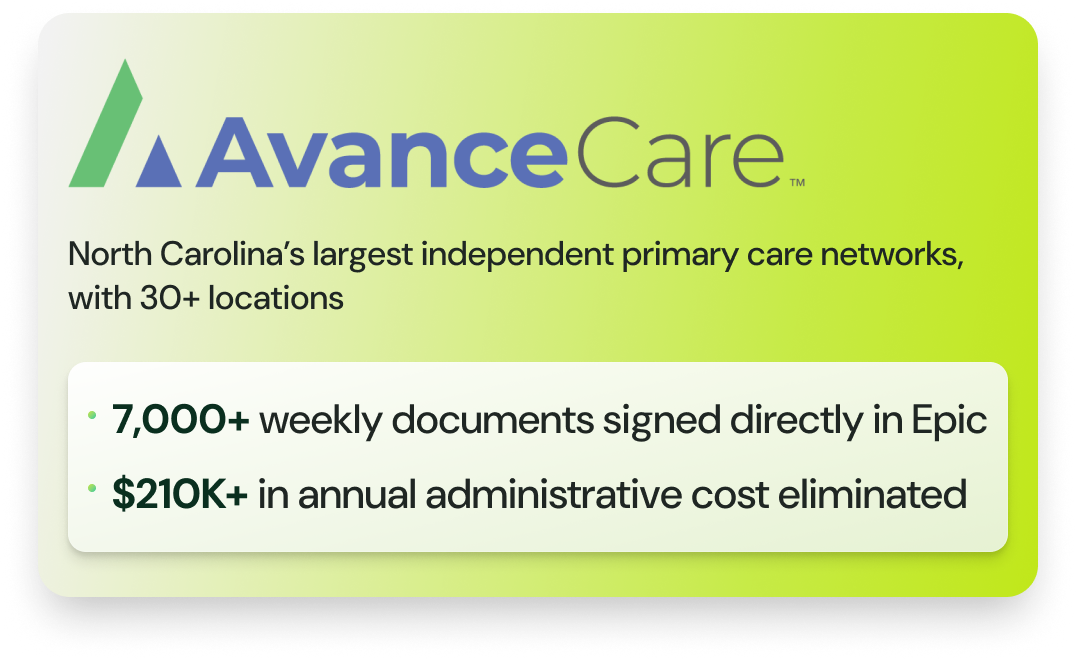
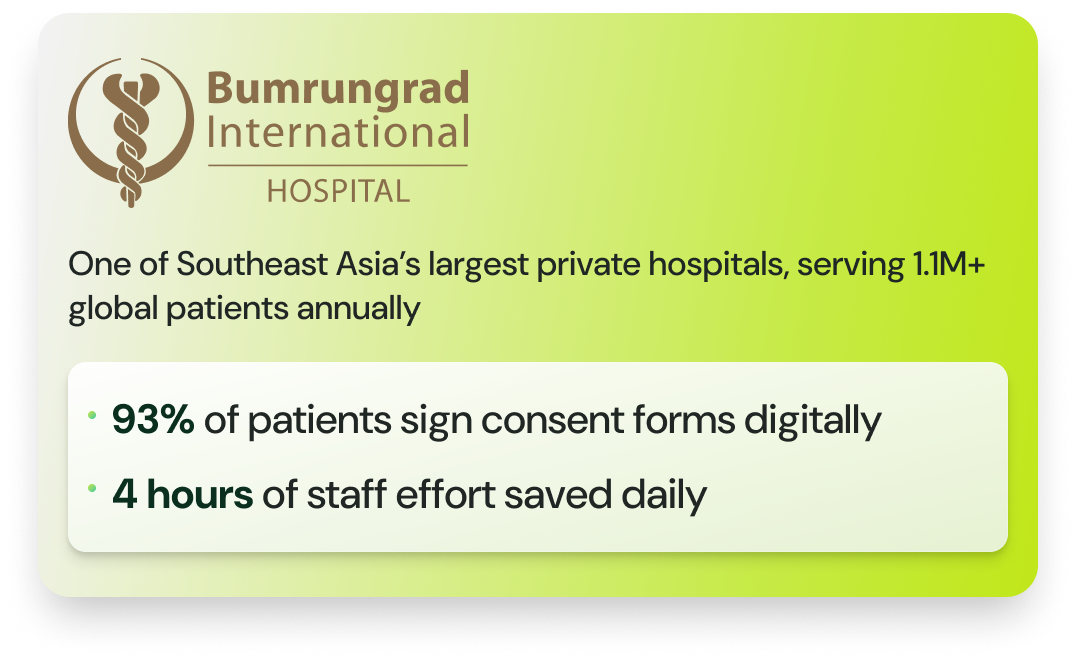
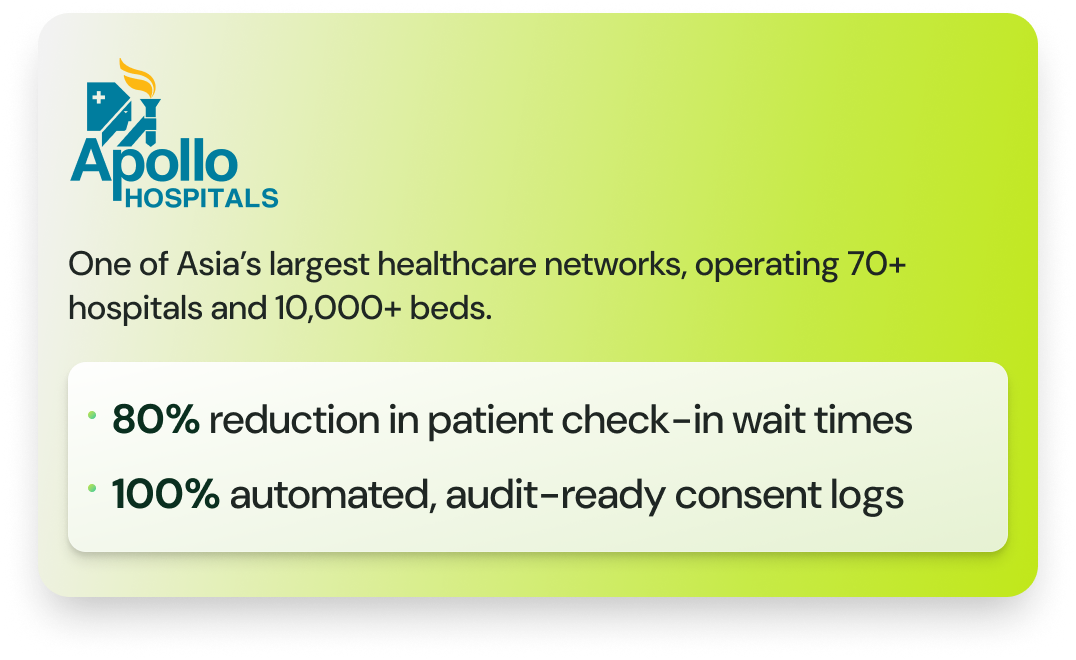













"Certinal's Healthcare Consent & Compliance Platform has transformed our digital consent workflows through seamless EMR integration. It’s a vital step in our commitment to delivering secure, innovative, and patient-centric care." Henrik Andersson CEO, Chief Innovation & Technology Officer of Bumrungrad International Hospital
eSignature That Meets Every Healthcare Standard Your Auditor Will Ask About
01
HIPAA
Signed documents encrypted at rest and in transit. Full audit trail on every signature event. BAA included with every healthcare deployment.
02
42 CFR Part 2
Substance use disorder records require consent-gated access. Certinal enforces segmented audit trails and release-specific authorization controls.
03
21 CFR Part 11
FDA-grade electronic signatures for clinical trial consent, IRB documentation, and medical device records.
04
CMS-0053-F
Electronic standards for claims attachments and signatures required by May 2028. Certinal meets these standards today.
05
ESIGN Act + UETA
Federal and state legal frameworks for electronic signatures. Every Certinal signature meets enforceability requirements across all U.S. jurisdictions.
06
CCPA / CPRA
Consumer data rights for California residents. Consent-linked signatures with documented processing purposes and deletion request support.
06
GDPR
Data subject rights, lawful processing basis, and cross-border transfer safeguards for healthcare organizations operating in the EU.
06
eIDAS 2.0
EU-recognized advanced and qualified electronic signatures. Cross-border signature validity across all EU member states.
06
DPDP Act 2023
Consent-linked signatures with documented audit trails and data subject rights management for Indian healthcare organizations.
06
PDPA
Compliant signature capture, consent tracking, and cross-border document handling for healthcare organizations in APAC.
06
SOC 2 Type II
Independently audited controls over how Certinal stores, processes, and transmits signed healthcare documents.
06
ISO 27001
Certified information security management system governing data handling, access controls, and operational security safeguards.
Why healthcare eSignature can't be one-size-fits-all
Hospitals adopted eSignature tools built for office documents. They work — until you need them inside an EHR, across regulations, or with an audit trail that holds up in court.
Certinal closes the gap between all three
Signature workflows, identity verification, audit trails, template governance, and compliance reporting — one system of record for healthcare’s signing requirements.
Signatures still happen on paper
Consent forms, treatment authorizations, discharge summaries — signed on paper, scanned by hand, version-uncontrolled. One missing signature delays a procedure, triggers an audit finding, or weakens a defense.
- 15-minute signing delay ~ $700K wasted annually
- No visibility into which documents are signed until pre-op
- Outdated signature pages circulate without anyone noticing
Signing tools weren't built for healthcare
Generic eSignature platforms handle the signature but ignore context. No EHR integration. No compliance audit trail. No chain-of-custody linking signer to the clinical record.
- HIPAA, DPDP, and PDPA require proof of signer identity
- No link between the signed document and the patient chart
- Cross-border operations face overlapping mandates with no unified system
There's no single source of truth
Signatures live in one system. Consent in another. Intake in a third. Credentialing in a fourth. No consolidated audit trail. Every gap is a compliance risk.
- No unified record connecting signature, document version, and signer identity
- Claims documentation still moves by fax — CMS-0053-F changes that by May 2028
- Audit readiness depends on manual reconciliation across systems
Signatures — captured, verified, governed, and proven
Consent forms, treatment authorizations, clinical documents — signed, verified, and filed to the patient chart before anyone has to ask where it is. Every event audit-trailed. Every document court-admissible.
Clinical Document Workflows
Clinical, administrative, and departmental documents. Signing launches inside your EHR. Procedure-specific forms auto-matched to the scheduled encounter. Signature status visible to the care team in real time.
Digital Patient Intake
Pre-visit registration signed from any device. Demographics pre-populate from the EHR. Every data point tied to a documented consent purpose.
Template and Forms Library
Version-controlled repository for clinical, administrative, and departmental forms. Outdated versions auto-retired. Joint Commission and DNV ready.
Tamper-Evident Signatures
Legally binding, identity-verified, time-stamped. Signer authentication at capture. Full chain-of-custody from signature to storage. HIPAA, 21 CFR Part 11, and CMS-0053-F compliant.
Frequently Asked Questions
What makes Certinal different from other healthcare eSignature software?
How does Certinal's healthcare eSignature software integrate with EHR systems?
What compliance standards does Certinal's healthcare eSignature software support?
Can patients sign documents remotely before their visit?
How does the platform verify signer identity?
Are electronic signatures from Certinal legally binding?
How long does healthcare eSignature software implementation take?
Certinal is built for clinical environments. Signing launches inside your EHR, documents file to the patient chart automatically, and every signature carries a compliance-grade audit trail. Purpose-built, not adapted from a general-purpose tool.
Directly with Epic, Oracle Cerner, MEDITECH, and OpenEMR. Signature requests launch inside your EHR and signed documents write back to the patient chart. Other systems connect via HL7 and FHIR APIs.
HIPAA, 42 CFR Part 2, 21 CFR Part 11, CMS-0053-F, ESIGN Act, UETA, CCPA, GDPR, eIDAS 2.0, DPDP, and PDPA. SOC 2 Type II and ISO 27001 certified. Full audit trail on every signing event.
Yes. Patients receive a secure link via SMS or email. Demographics can pre-populate from the EHR. Signed consent and intake forms are in the patient chart before the appointment.
Multi-factor authentication, email and SMS verification, and knowledge-based authentication. Every signature links signer identity to the document with a tamper-evident seal and complete timestamp.
Yes. Signatures meet ESIGN Act, UETA, and eIDAS 2.0 requirements. Tamper-evident seals, complete audit trails, and chain-of-custody documentation make every signed document court-admissible.
7 business days for a single facility. Multi-facility rollouts within 30–60 days. Dedicated implementation manager on every deployment.
Every healthcare document needs a compliant signature.
Certinal – One platform. See it in 15 minutes.
© 2026 Certinal Inc. All rights reserved.
- Privacy Policy
- Terms & Conditions